Skip to content
The Things Stack documentation home
Getting Started Concepts Cloud Enterprise Integrations API Hardware
Getting Started Concepts
Cloud Enterprise
Integrations API Hardware
Get The Things Stack

    Recent searches

      Popular pages

      • Getting Started
      • Adding Gateways
      • Adding Devices
      • Payload Formatters
      • Webhooks
      • Authentication

      No results for “”.

      • Check the spelling, or try fewer or more general words.
      • Ask the community on The Things Network Forum
      • Contact support
      ↑↓ to navigate ↵ to open Esc to close

      Integrations

      • Overview
      • Adding Applications
      • Data Formats
      • Payload Formatters
      • Webhooks
      • Storage Integration
      • Integrate with popular IoT platforms
        • akenza
        • AllThingsTalk Maker
        • AnyViz
        • AWS IoT
        • Azure IoT Central
        • Azure IoT Hub
        • Blockbax
        • Blynk
        • Cayenne
        • Cloud Studio
        • Daizy
        • Datacake
        • Delmation Products
        • deZem
        • evrlast
        • Homey
        • InfluxDB Cloud 2.0
        • IoT in a Box
        • IoT Wonderland
        • Kaa
        • Losant IoT Platform
        • MClimate
        • my IoT open Tech
        • Qubitro
        • TagoIO
        • Telemetry2U
        • Tellsens
        • thethings.iO
        • Thinger.io
        • ThingsBoard
        • ThingSpeak
        • TTN Mapper
        • Ubidots
        • UIB
        • UnaConnect
        • Widgelix
        • Withthegrid
        • Zoho IoT
      • Other integrations
      • Application Packages
      • Examples

      Datacake

      Updated 20 January 2025 Edit on GitHub
      Copy page
      • View as MarkdownThis page as plain text
      • Open in ChatGPTAsk questions about this page
      • Open in ClaudeAsk questions about this page

      Datacake is a multi-purpose IoT platform, which provides the possibility of building custom IoT applications, without requiring programming skills.

      Prerequisites

      1. A user account on Datacake.

      Setup Datacake

      First, create a Workspace on Datacake by navigating to the Create Workspace button in the upper left corner.
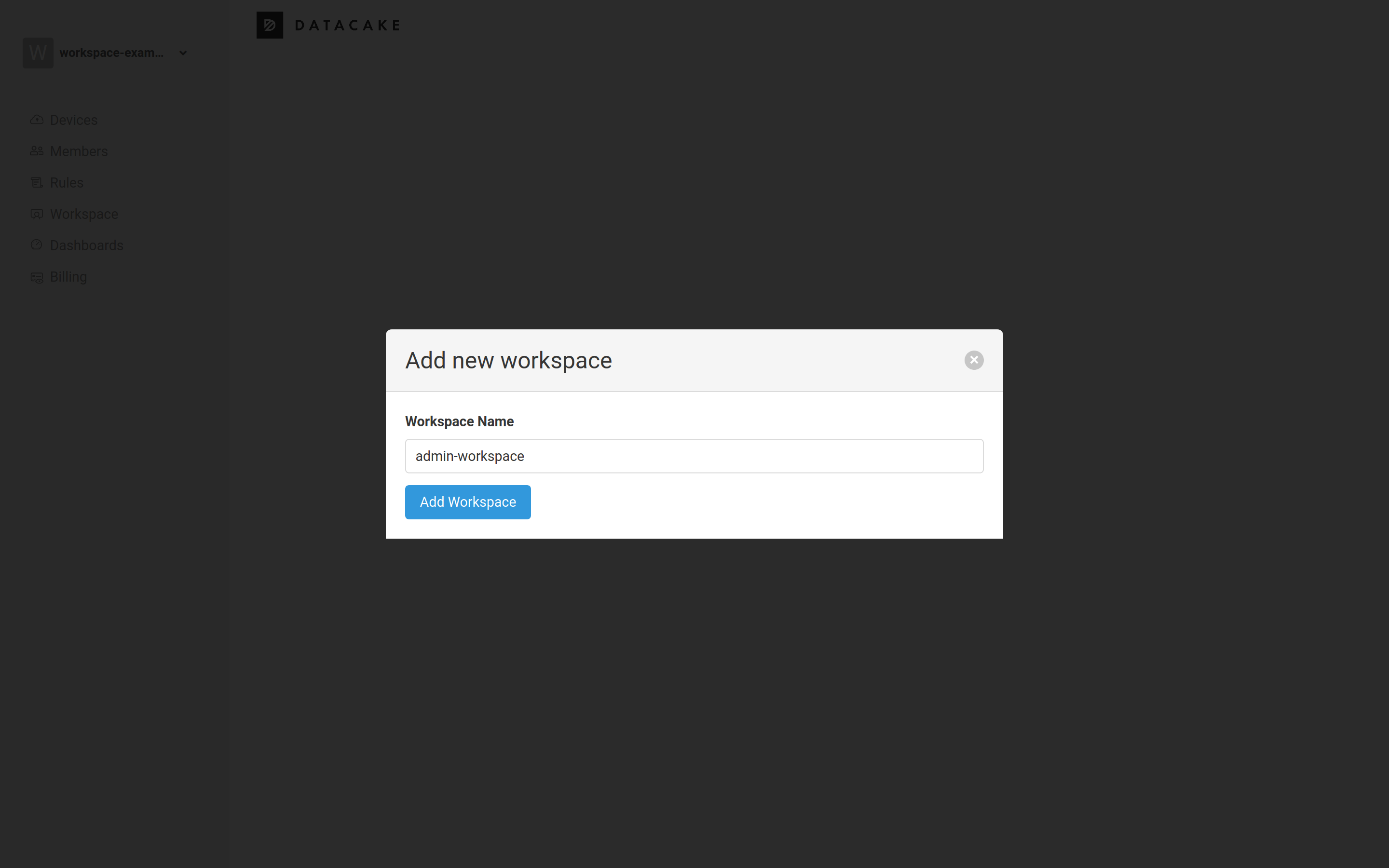
      Add workspace on Datacake

      On the left hand menu, click Devices. To add a new device, click the Add Device button on the right.

      In the Add Device pop-up menu, choose LoRaWAN → Generic LoRa Device. When asked Which device are you missing?, just click Skip and then select The Things Industries adapter.
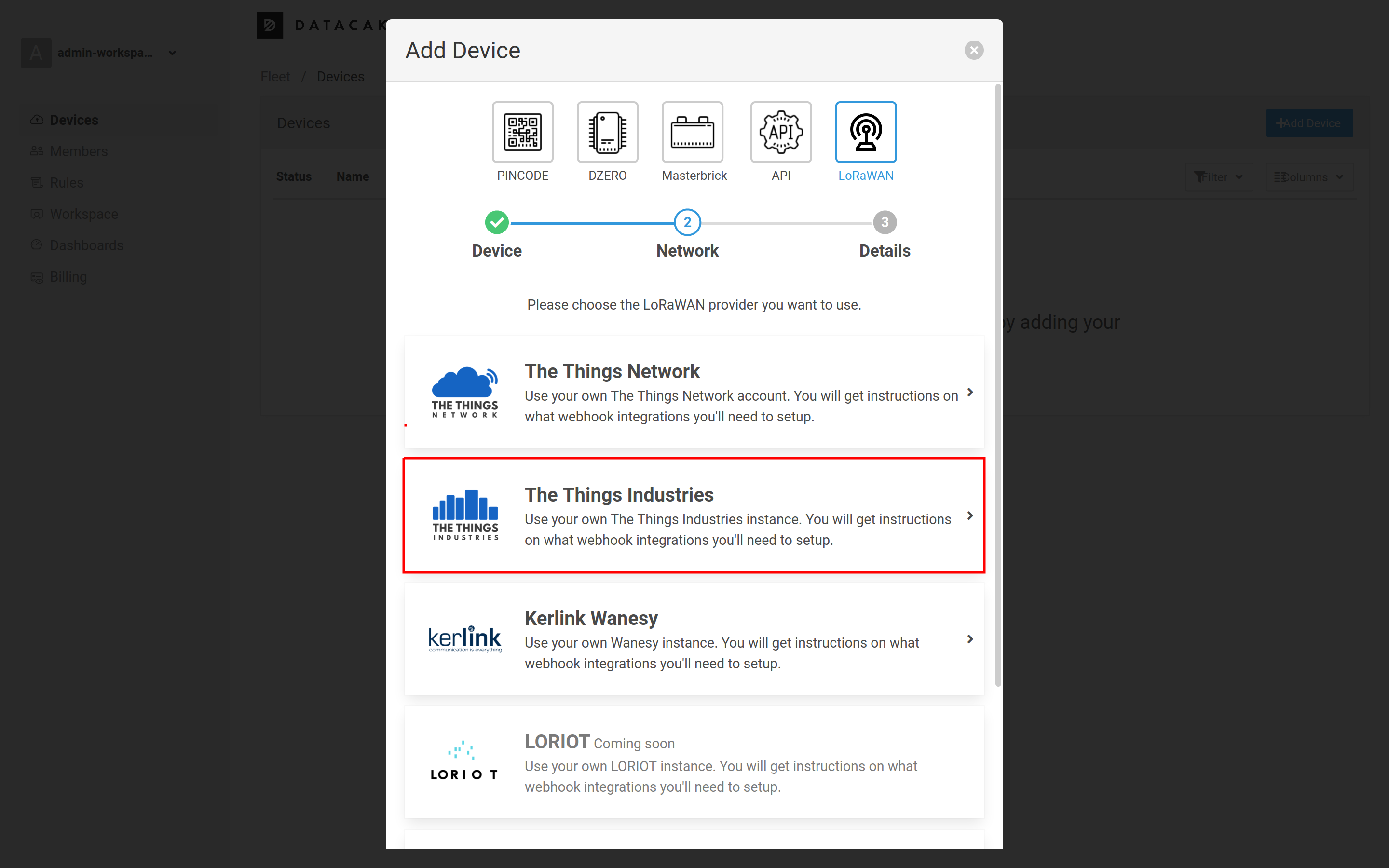
      Datacake TTI adapter

      After selecting your subscription plan, fill in Name and DevEUI for your device, then click on Add Device to finish.

      Once the device is created, you can click on it in the Devices menu to enter its settings.

      In the Configuration tab, you can find the LoRaWAN section, where you can configure Network settings, choose to Authenticate Webhook or define Payload Decoder.

      Under Network, choose The Things Industries from the drop-down menu.

      Paste your device’s End device ID from The Things Stack in the TTI Dev Id field.

      The TTI Server Url field should contain the URL of your The Things Stack deployment. See the Server Addresses section for more info.

      Paste your Application ID from The Things Stack in the TTI App Id field.

      In The Things Stack, navigate to API keys on the left hand menu, click the Add API key button, give it a Name and confirm that you have copied it to finish. Paste the copied API key into the TTI Api Key field on Datacake.
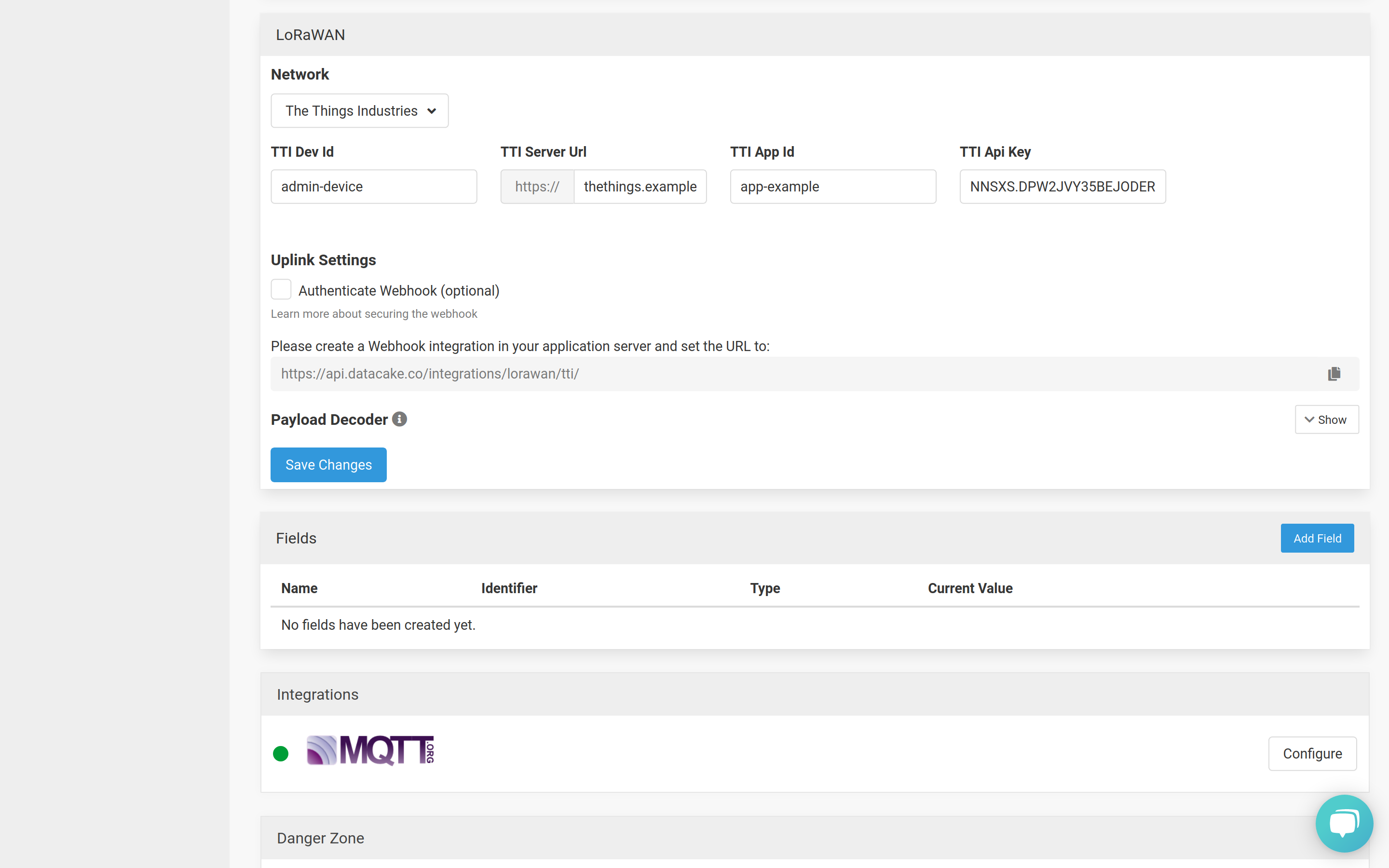
      LoRaWAN settings

      Configure The Things Stack

      After finishing Datacake setup, use the Datacake Webhook template to create a Webhook integration on The Things Stack.

      To integrate, you only need to fill out the Webhook ID field and provide an API token from Datacake for the authorization.
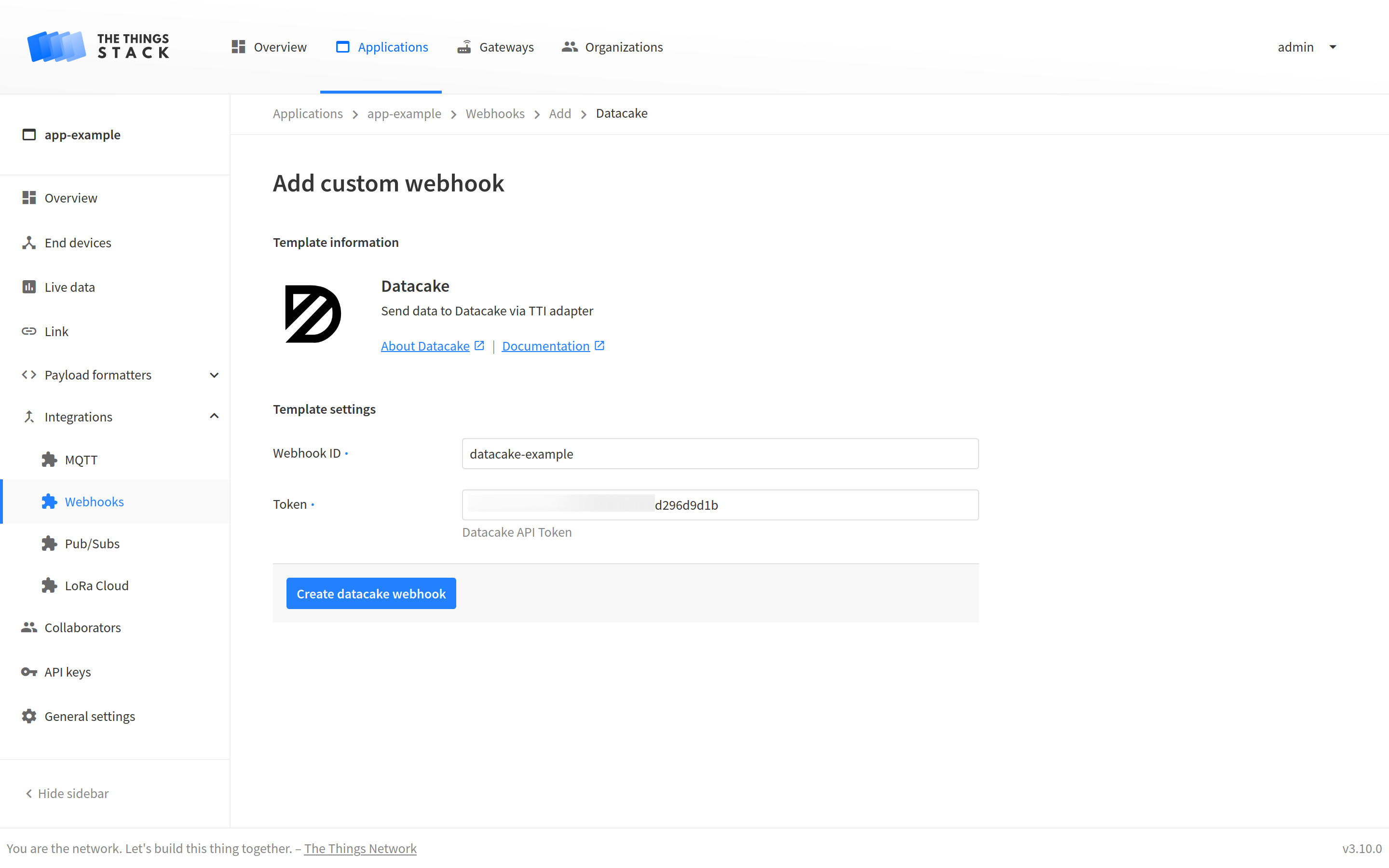
      Datacake webhook

      To see the values of all parameters of the Datacake integration, click on the integration after you created it with the Webhook template.

      Once the setup is finished, you can navigate to device’s Debug tab on Datacake, where you can see the incoming messages and manipulate or monitor your data.

      Check the official Datacake documentation to learn how to decode the payload received from The Things Stack.

      Scheduling Downlinks

      In addition to forwarding messages from The Things Stack to Datacake, you can also schedule downlink messages to be sent from Datacake to your end device.

      Enter your device’s settings page on Datacake and go to the Downlinks tab.

      Click the Add Downlink button.

      Next, fill in the Name field, define the Payload encoder and click Save Downlink.

      Learn to write payload decoders in the official Datacake documentation.
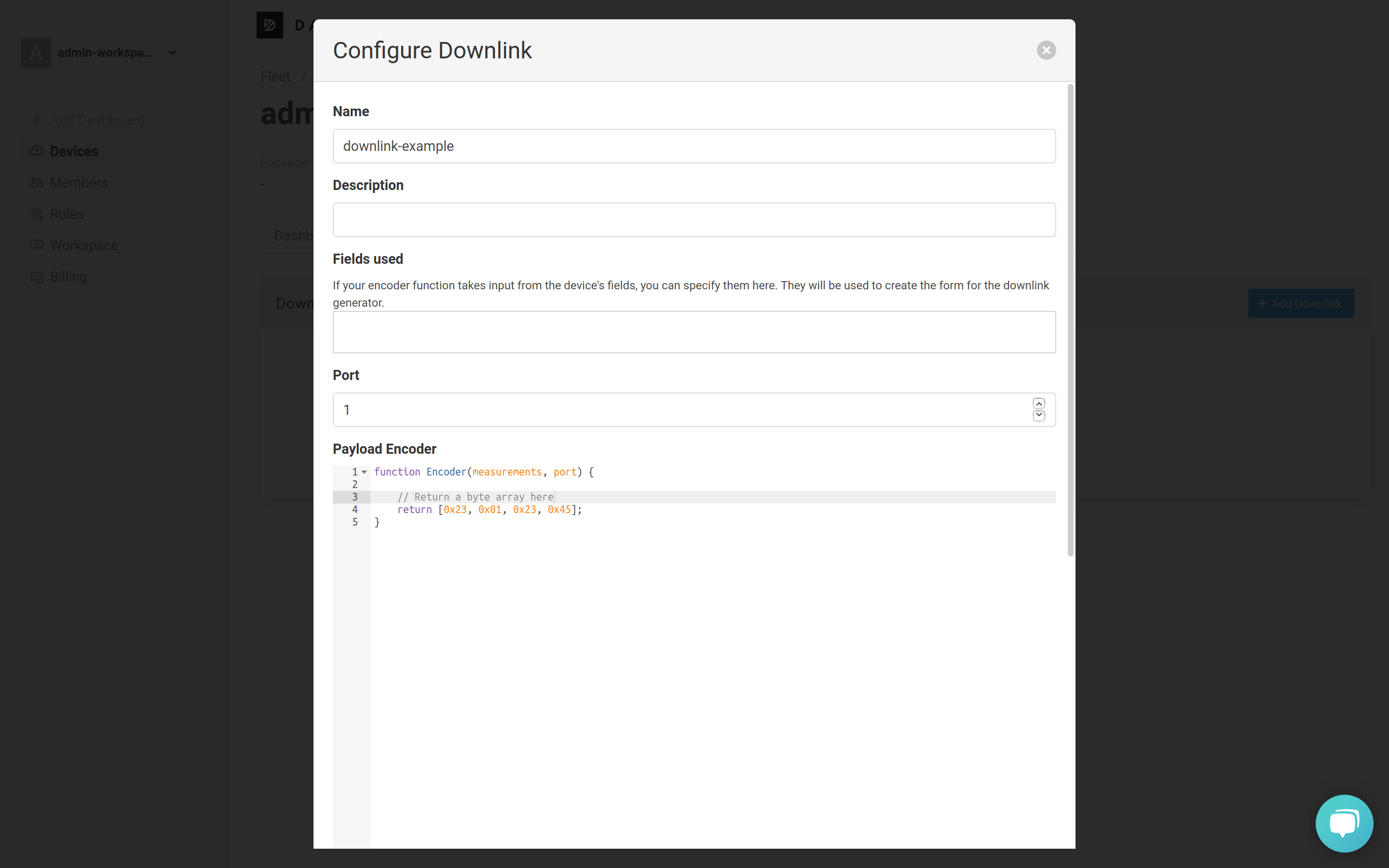
      Configuring downlink

      Now simply click the Send Downlink button to schedule a downlink and check your device’s logs to see the incoming message.

      ← Daizy Delmation Products →

      On this page

      • Prerequisites
      • Setup Datacake
      • Configure The Things Stack
      • Scheduling Downlinks

      Sections

      Getting Started

      Concepts

      Cloud

      Enterprise

      Integrations

      API

      Hardware

      Sitemap

      View our Sitemap

      Contributing

      GitHub

      About Us

      The Things Industries

      Privacy Policy

      Cookie settings

      Cookie Settings

      We use cookies to enhance your experience, analyze site traffic and deliver personalized content. Read our Privacy Policy.

      Cookie categories