LoRa Cloud Modem and Geolocation Services
The LoRa Cloud Modem and Geolocation Services v1 application package communicates the uplinks received from a compatible device to the LoRa Cloud Modem and Geolocation Services, and schedules the downlinks received from the service back to the device.
More information on the LoRa Cloud Modem and Geolocation Services can be found in the official LoRa documentation.
Creating a New Uplink Token
In order to use the LoRa Cloud Modem and Geolocation Services application package, a new access token must be created in order to allow the Application Server to send the uplinks to the Device & Application Services.
The new token can be created in the LoRa Cloud Modem and Geolocation Services portal, in the Token Management section.
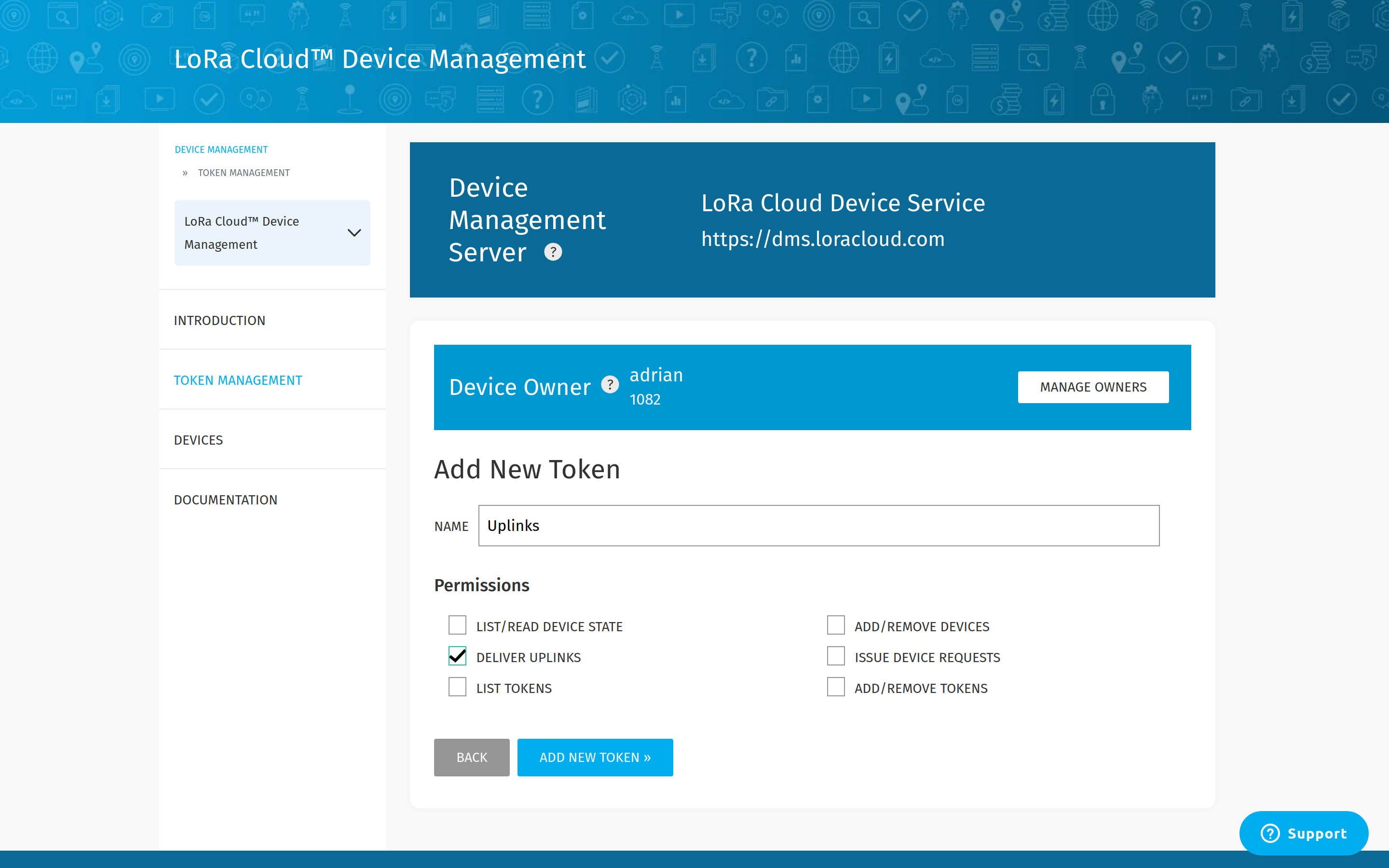
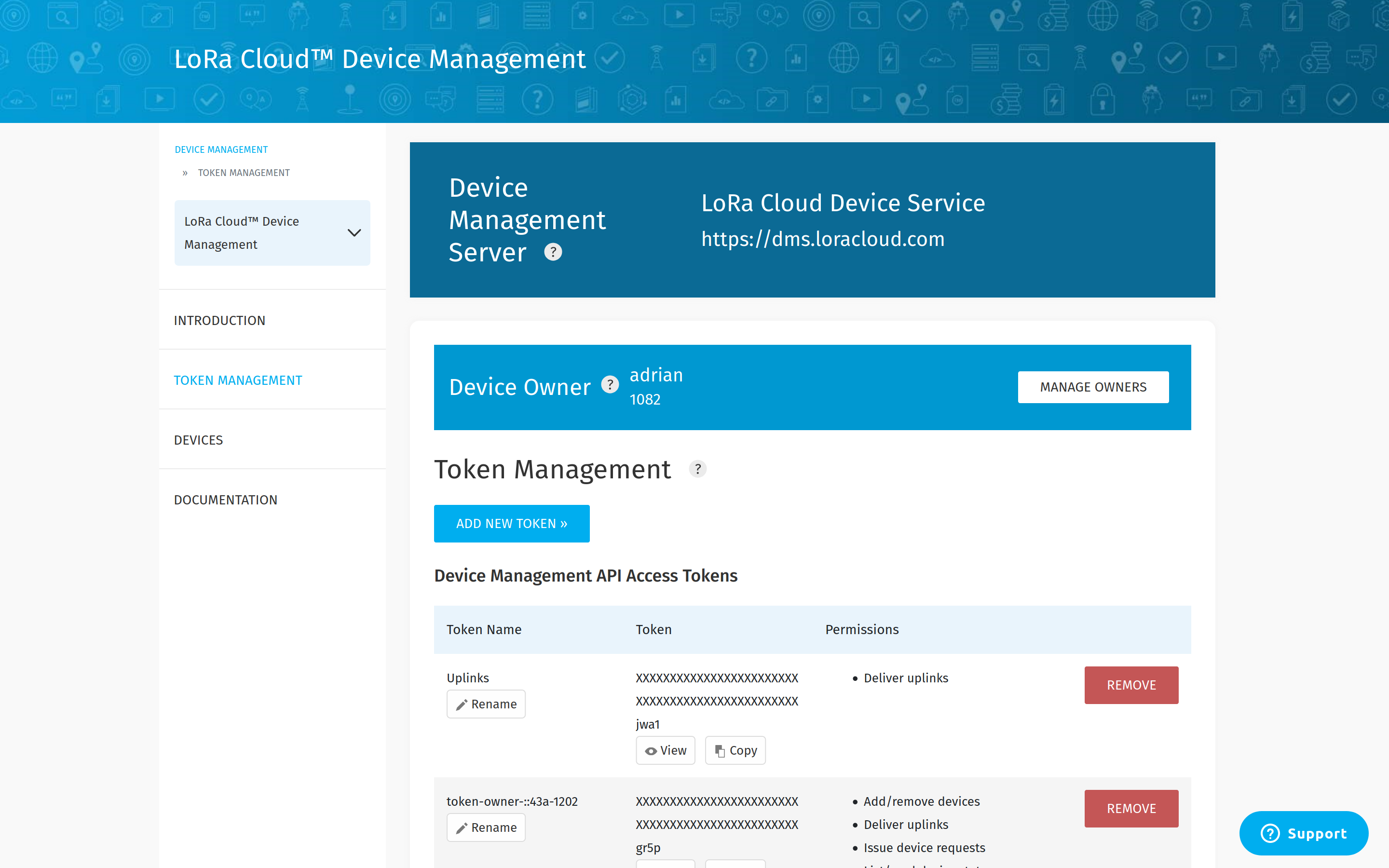
After filling in the token name and clicking the Add New Token button, the token will be created.
Enabling the Package
Command-line interface only
The instructions below use the command-line interface (CLI).
The package can now be enabled using the default-associations set command:
APP_ID="app1"
F_PORT=199
# Create a JSON formatted file containing the uplink token
echo '{ "token": "AQEAdqwV67..." }' > package-data.json
# Create the association
ttn-lw-cli applications packages default-associations set $APP_ID $F_PORT --package-name lora-cloud-device-management-v1 --data-local-file package-data.json
This will enable the package on FPort 199 of all of the devices of application app1. You can now use the LoRa Cloud Modem and Geolocation Services in order to manage your device!
Output
{
  "ids": {
    "application_ids": {
      "application_id": "app1"
    },
    "f_port": 199
  },
  "created_at": "2019-12-18T10:35:15.565807113Z",
  "updated_at": "2019-12-18T22:06:21.693359719Z",
  "package_name": "lora-cloud-device-management-v1",
  "data": {
    "token": "AQEAdqwV67..."
  }
}
Using a Custom Server URL
Command-line interface only
The instructions below use the command-line interface (CLI).
The package may be configured to use a custom server URL using the package data:
# Create a JSON formatted file containing the uplink token and the server URL
echo '{ "token": "AQEAdqwV67...", "server_url": "https://app.example.com/" }' > package-data.json
# Create or update the default association
ttn-lw-cli applications packages default-associations set $APP_ID $F_PORT --package-name lora-cloud-device-management-v1 --data-local-file package-data.json
Output
{
  "ids": {
    "application_ids": {
      "application_id": "app1"
    },
    "f_port": 199
  },
  "created_at": "2020-05-14T02:04:45.286874524Z",
  "updated_at": "2020-05-14T02:04:45.286874524Z",
  "package_name": "lora-cloud-device-management-v1",
  "data": {
    "server_url": "https://app.example.com",
    "token": "AQEAdqwV67..."
  }
}
Package Data JSON Schema
The package data format is common between both default associations and associations, and should contain the following fields:
| Field | Type | Description | Required | Default value |
|---|---|---|---|---|
token |
string |
The acces token to be used by the package to submit uplinks to the LoRa Cloud Modem and Geolocation Services | Yes | None. |
server_url |
URL |
The custom base URL to be used for service communication | No | https://mgs.loracloud.com |
Fields can be customized on a per device basis, by overriding the field in the package data of the association.